Don’t be fooled!
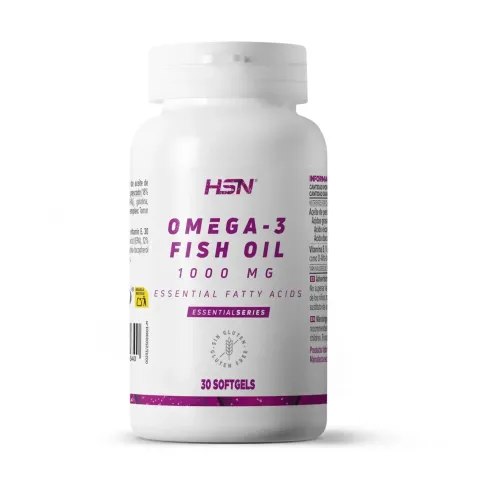
Our Omega-3 Fish Oil 1000mg guarantees a real content per softgel of 180mg eicosapentaenoic acid (EPA) and 120mg docosahexaenoic acid (DHA).
Find out why we explicitly state the amounts of Omega-3 and why it’s necessary, while other companies only show percentages.
Read the article here

Natural Fish Oil rich in Omega-3
Omega-3 Fish Oil 1000mg from EssentialSeries is a softgel dietary supplement made from a clean, high-quality fish oil, with a guaranteed content of omega-3 fatty acids, highly valued for their nutritional properties, especially in Western diets where intake is quite deficient compared to ideal levels.
How many times have you eaten oily fish in the last week? And seaweed? These two are the main sources of omega-3 fatty acids in the diet, and realistically... In the West, unlike regions like Japan where fish consumption is widespread, intake is not enough. Omega-3 supplements are an excellent way to complement the diet of people who don’t eat large amounts of omega-3 rich foods.
HSN’s Omega-3 Fish Oil is a dietary supplement that meets all necessary quality specifications, maximum purity, and guaranteed fatty acid content; making it a benchmark product in the international market.
Authentic Quality Omega-3
The quality of omega-3 fatty acids is important because the oily fish from which the omega-3 rich oil is obtained is very susceptible to contamination, degradation, or lacking proper properties, and to ensure this, companies selling it must control everything necessary.
At HSN we take part in the whole process – enjoy a unique development in quality and safety!
Guaranteed content. HSN’s Omega-3 is measured by mass, not volume
Omega-3 fatty acids are part of the fish oil contained in the softgels, this is always the case, in all products on the market, meaning there’s no such thing as a '100% Omega-3' product – that’s impossible.
The amount of omega-3 present in fish oil must be measured after processing, which guarantees a certain content, usually 18% / 12%, which is the most common.
This causes a problem because it’s confusing, check this out:
If I tell you that 18% of the product is EPA, and the softgel has 1000mg of fish oil... how much EPA does it have? 180mg, right? It should, but it depends.
Usually, companies set fatty acid percentages based on the softgel’s volume, which, while valid, in our view is a complete scam for the consumer, as it easily leads to misunderstanding, and it’s very common!
When the 18% content is measured by softgel volume, there isn’t 180mg of EPA, but around 160mg, meaning by mass it’s really 16% EPA. You’re thinking you’re consuming more than it actually has and paying for it!
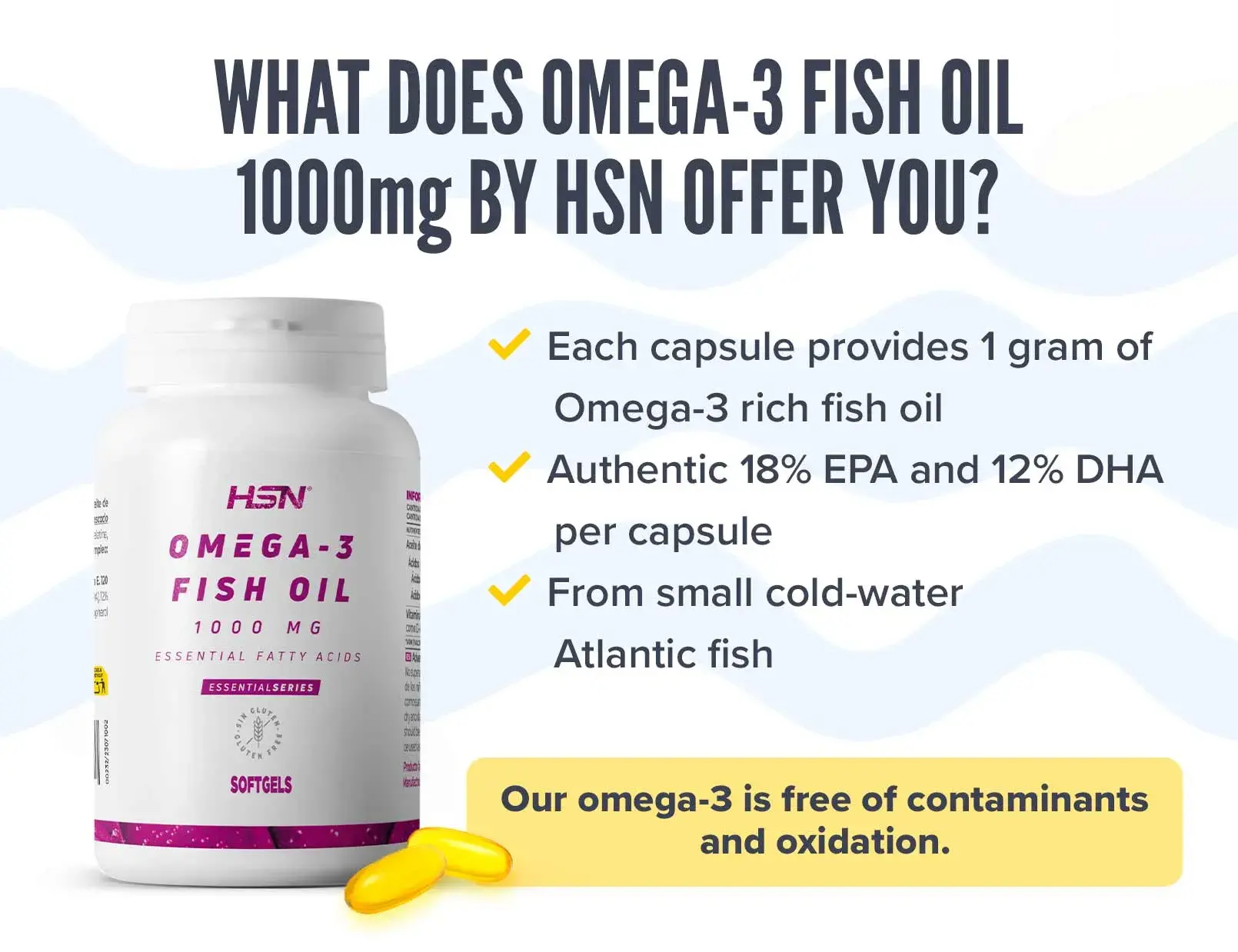
At HSN we measure omega-3 in our products by mass, so our Omega-3 Fish Oil 1000mg is authentic 18% EPA / 12% DHA by mass, meaning each 1000mg softgel provides 180mg EPA and 120mg DHA.
We’re completely transparent and offer the best quality on the market at an unbeatable price.

Small, clean fish oil, molecularly distilled
The fish oil encapsulated in the softgel has a natural origin, and this is always the case too, but of course... not all fish oil is the same, meaning it’s not the same to get fish oil from a sardine as from a salmon.
Small fish, such as sardines and anchovies, are the ideal sources to extract oils for omega-3 fatty acid supplements.
This is because other common species like salmon have a much larger skin surface area, so they tend to accumulate more contaminants and metals like mercury, which they’re exposed to in the sea. Small fish aren’t subjected to this, so naturally, their oil purity is much higher.
Also, the fish oil used to make HSN’s omega-3 has been molecularly distilled, a special purification process for omega-3s that removes any traces of heavy metals and natural contaminants from the marine environment that might remain in the fish oil used to develop the supplement.
Supply of intact essential fatty acids, 0% peroxidation thanks to quality control and antioxidants
Fish, once caught, are steamed to obtain their oil. This is the method we follow at HSN and it’s ideal to prevent omega-3 fatty acids from peroxidizing, since the steam doesn’t significantly raise the temperature of the fish fat from which the oil is obtained and therefore doesn’t degrade it.
Likewise, the entire process of oil treatment and preservation, as well as softgel manufacturing and subsequent storage, is designed to guarantee the absence of oxidation of the oil and its essential fatty acids.
Not to mention that a significant amount of vitamin E, an important antioxidant, has been added to HSN’s product, which helps protect cells from oxidative damage. This property also protects the fatty acids in the fish oil softgels from oxygen, light, and oxidation, ensuring their greater integrity.
High unit dose: 1000mg Fish Oil (180mg EPA / 120mg DHA) per softgel
We’ve already mentioned the importance of measuring omega-3 by mass and not by softgel volume, but that’s not the only important thing, we must also consider the gross amount of fish oil encapsulated per unit.
For example, if softgels are small and contain 500mg fish oil (quite common), even if the EPA amount is authentic 18%, they’ll only provide 90mg per unit, and you’ll end up having to take many more softgels daily.
HSN’s softgels provide 1000mg of authentic fish oil per unit, a high concentration ideal for comfortable dietary supplementation.
Free of dioxins and related compounds. No anisidine, furans, or PCBs
Purity or how 'clean' fish oil is is established based on its content of contaminants like dioxins, furans, and PCBs.
HSN’s omega-3 fish oil is free of these and other contaminants naturally present in marine fish due to environmental exposure.
It also contains no anisidine, which is a measure of fish oil deterioration and thus a marker of quality loss.
No colorants, flavorings, or preservatives. Natural fish oil and gelatin softgel product
HSN’s omega-3 softgels contain no colorants, preservatives, or flavor maskers.

They’re pure fish oil softgels rich in omega-3, with vitamin E. The most natural!
They contain no unnecessary additives nor need anything to mask their organoleptic properties, since thanks to the coating agent’s quality control: they have no taste or smell, making them easier to use.
Fish oil sourced from cold waters. Better quality and lower exposure to contaminants
The cold waters of the Atlantic are locations where seawater is purest and cleanest, and therefore where the animals living there are exposed to less contamination.
The small fish used to make the omega-3 oil in our supplements are caught in these carefully selected locations to ensure that the original raw material (the fish) used to obtain the oil is already of the highest quality.
Discover the importance of these fatty acids
HSN’s Omega-3 Fish Oil 1000mg is a dietary supplement with a high Omega-3 content.
The main members of this fatty acid family are:
- Alpha-linolenic acid (ALA).
- Eicosapentaenoic acid (EPA).
- Docosahexaenoic acid (DHA).
Docosahexaenoic Acid (DHA)
- Docosahexaenoic acid helps maintain normal brain function. 1
- Docosahexaenoic acid contributes to the maintenance of normal vision.2
EPA + DHA
- Eicosapentaenoic and docosahexaenoic acids contribute to normal heart function.3
As you can see, the importance of omega-3 fatty acids is very high, especially for caring for the most sensitive organs in the human body like the brain, heart, and eyes.
Don’t forget to ensure an adequate omega intake with our high-quality supplement!
Tips and tricks to avoid fishy burps from omega-3
Something that often causes issues for omega-3 users is that these supplements, having a high concentration of fish oil, can cause 'burps' that leave a fishy taste hours after taking them.
This is common in people who take omega-3 on an empty stomach, and at HSN we discourage this way of taking them, as it’s less effective in the first place and contributes to this unwanted omega-3 effect.

The best advice to avoid these effects is to take the softgels with a meal, preferably a light one, without dairy or legumes that might cause gas and contribute to burping up the meal.
Get to know all our omega-3s
At HSN we have different types of Omega-3 that mainly differ in their EPA and DHA concentration. Here they are:
Which one’s yours?
References
- Albert, B. B., Derraik, J. G. B., Cameron-Smith, D., Hofman, P. L., Tumanov, S., Villas-Boas, S. G., … Cutfield, W. S. (2015). Fish oil supplements in New Zealand are highly oxidised and do not meet label content of n-3 PUFA. Scientific Reports, 5, 7928.
- Bonilla-Mendez, J. R., & Hoyos-Concha, J. L. (2018). Methods of extraction, refining and concentration of fish oil as a source of omega-3 fatty acids. Corpoica Ciencia y Tecnologia Agropecuaria, 19(3), 645–668.
- EFSA Panel on Dietetic Products, N. and A. (NDA). (2009). Scientific Opinion on the substantiation of health claims related to eicosapentaenoic acid (EPA), docosahexaenoic acid (DHA), docosapentaenoic acid (DPA) pursuant to Article 13(1) of Regulation (EC) No 1924/2006. EFSA Journal, 7(10), 1263.
- EFSA Panel on Dietetic Products, N. and A. (NDA). (2010). Scientific Opinion on the substantiation of health claims related to docosahexaenoic acid (DHA) pursuant to Article 13(1) of Regulation (EC) No 1924/2006. EFSA Journal, 8(10), 1734.
- Kris-Etherton, P. M., Harris, W. S., & Appel, L. J. (2002). Fish consumption, fish oil, omega-3 fatty acids, and cardiovascular disease. Circulation, 106(21), 2747–2757.
1 The effect is achieved with a daily intake of 250mg DHA.
2 The effect is achieved with a daily intake of 250mg DHA.
3 The effect is achieved with a daily intake of 250mg EPA and DHA.