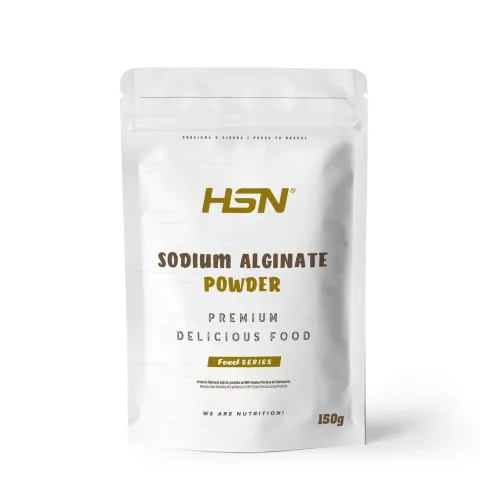
Sodium alginate: the “ace up the sleeve” of modern cooking
Sodium Alginate from FoodSeries is powdered sodium alginate (E 401).
Sodium alginate is a food-grade hydrocolloid (E401) highly valued for its ability to modify textures: from thickening a sauce to creating gels and spheres with a liquid center. At HSN you’ll find it in powder form with a clear composition: 100% sodium alginate. If you’re into modern cooking, batch cooking, or fitness baking at the next level, this ingredient opens up a huge range of originality so you can have more options to surprise.
An ingredient with many possibilities: improves texture, stability, and presentation of your recipes.
What is sodium alginate and why is it so widely used in food?
Sodium alginate is the sodium salt of alginic acid, a polysaccharide found in brown seaweed. In food, it’s mainly used as a thickener, stabilizer, and gelling agent (E401), because it interacts with water and, under certain conditions, can form gel-like structures.
That’s why you’ll see it in many categories: sauces, dairy products, confectionery, gels, and creative cooking techniques like spherification.
How it works in the kitchen: texture control without changing flavor
Sodium alginate isn’t meant to “add flavor,” but to give structure. Used right, it helps you achieve more professional finishes, especially in recipes where texture makes all the difference.
1) Thicken and add body
Perfect when you want a sauce or coulis with more consistency, or when you’re aiming for a creamier finish in cold preparations. Instead of adding flours or starches, here you work with a thickener very typical in food formulation.
2) Stabilize mixtures
In professional applications, it’s used as a stabilizer to help maintain homogeneity and texture (for example, in sauces combining oil and water phases, like mayonnaise), preventing separation and improving final consistency.
3) Gelation with calcium: the gateway to spherification
The most fun and original use of sodium alginate comes when calcium enters the picture: a membrane/gel can form, which is the basis of techniques like spherification (direct or reverse), widely used in modern cooking to create “caviar” or spheres with a liquid interior.
Usage ideas: recipes with premium aesthetics
If you train and watch your diet, sodium alginate can be that little detail that transforms a typical recipe into something new and tempting. We’re talking about a complete makeover of presentation, texture, and experience.
- “Caviar”-style toppings for bowls: imagine coffee or cocoa pearls on a bowl with whey protein and fruit.
- More stable sauces for meal prep: red fruit coulis, light chocolate, or “fit” caramel for yogurt or skyr.
- Desserts with a “clean cut” look: gels and bases with structure to serve in a glass, layered, with a patisserie vibe.
- Mocktails and presentations: spheres in non-alcoholic drinks for a different touch at your dinners or events.
Recipes and combos with HSN ingredients
Here are some ideas designed so you can integrate it with usual fitness pantry ingredients. Adjust sodium alginate use to the technique and recipe (the key is the final texture you want).
“Coffee caviar” for a protein bowl
Make a cold brew base with our Keto Instant Coffee, sweetened with erythritol. Using a spherification technique, you can create small pearls to top a bowl with protein and defatted cocoa.
Stable red fruit coulis for yogurt and layered desserts
Blend red fruits, adjust sweetness with sucralose, and work the texture until you get a consistent and creamy coulis. Use it as a layer for yogurt, skyr, or desserts with casein.
“Choco-coco” pearls for a crunchy-creamy topping
Mix chocolate protein with a liquid part (for example, plant-based drink) and a touch of coconut cream. Create pearls to decorate protein pancakes or a pudding and give it a different finish, like creative baking.
Frequently asked questions (Q&A) so you know how to use it
Why does it sometimes “gel” all of a sudden?
In techniques like spherification, if sodium alginate comes into contact with calcium-rich liquids, it can form a gel quickly. That’s why there are variants like reverse spherification for certain liquids (for example, dairy).
Does it work with any liquid?
Not all liquids behave the same. Some bases require adapting the approach (due to acidity, alcohol, or mineral content). In cooking, it’s recommended to adjust the technique (direct or reverse) depending on the type of mixture.
Do I need special equipment?
For basic use as a thickener, no. For spherification, it helps to have simple utensils (glasses, measuring spoons, blender) and work calmly to achieve quality results. Cooking guides usually offer a step-by-step process to improve consistency, and we recommend checking them out.
How do I store it?
As a powder, keep it well sealed, in a cool, dry place, and avoid humidity to maintain easy and consistent handling.
Why choose HSN’s sodium alginate: straightforward composition and practical focus
We don’t use blends or “filler” ingredients in its development: only 100% sodium alginate. This lets you use it as a culinary tool with a clear goal: get the texture you want (more body, more stability, or creative techniques) without altering your recipe’s flavor profile.
Bibliography