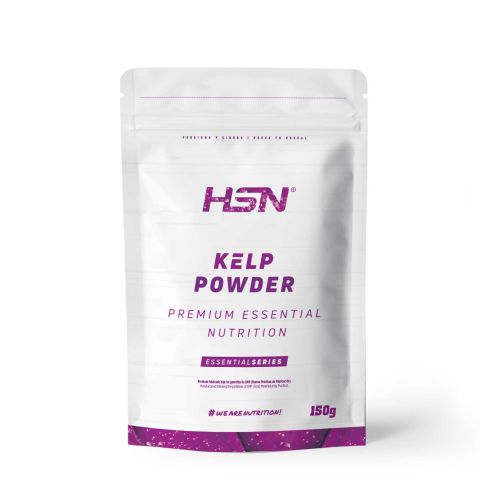
Kelp powder: a natural source of iodine
Kelp powder from EssentialSeries is made from kelp seaweed (Ascophyllum nodosum), a brown marine algae known for its natural iodine content. At HSN, we chose a powder format because it’s easy to add to your daily diet, with no other ingredients than the dried and ground kelp itself.
We like this product because it perfectly reflects how we see nutrition: quality ingredients, clean composition, and practical use for those wanting to boost their diet with natural-origin foods.
Kelp is one of the most well-known seaweeds in marine nutrition. It grows in mineral-rich environments and naturally concentrates iodine in its structure. That’s why it’s especially interesting for people wanting to support their iodine intake through a marine plant source, especially in diets where fish, seafood, or iodized salt consumption might be lower.
A simple, natural ingredient packed with nutritional value: kelp powder, no additives, for those looking for an easy way to add natural iodine.
Why is iodine the star of kelp?
The main nutritional interest in kelp lies in its high iodine content. Iodine is an essential mineral involved in important body functions and must be obtained through diet. In this case, iodine appears naturally in the algae, not as an isolated added ingredient.
Iodine contributes to normal energy metabolism, normal cognitive function, normal nervous system function, maintenance of normal skin, and normal production of thyroid hormones and normal thyroid function.
This makes kelp a particularly interesting option for those looking for a food based on a complete, recognizable ingredient from the marine environment. We’re not talking about a complex formula or a mix with many components: it’s pure kelp powder, no additives.
A brown marine algae for daily use
The kelp used in this product belongs to the species Ascophyllum nodosum, a brown algae highly valued for its natural mineral profile. Brown algae are typical of cold, nutrient-rich marine areas and have traditionally been used as food in various cultures, especially those with a strong presence of seafood in their diet.
At HSN, we stand by a straightforward product composition: 100% kelp powder. That means no flavors, colorants, sweeteners, preservatives, or added additives. Its value lies precisely in its simplicity: a marine plant ingredient, dried and ground for easy use.
It’s vegan-friendly, gluten-free, GMO-Free, and keeps a clean label formula based exclusively on kelp seaweed.
Also, being a powder product, it offers a more flexible experience. You can add it to savory recipes, mix it into plant-based preparations, or use it as a marine touch in dishes where its characteristic flavor fits. It’s a convenient way to include kelp in your diet without changing your habits.
Flavor, texture, and use: easy to integrate
Kelp has a naturally marine flavor, with vegetal and slightly salty notes. It’s not sweet or neutral, so it works especially well in savory recipes. It’s great in broths, soups, vegetable creams, rice dishes, seafood plates, dressings, savory bowls, or Asian-inspired recipes.
You can also add small amounts to green smoothies, especially when combined with strong-flavored plant ingredients like spinach, celery, cucumber, lemon, or ginger. In these preparations, it adds a marine nuance and a practical way to boost natural iodine.
For hot dishes, add it at the end of cooking; for cold dishes, just mix well for an even distribution.
HSN tip: use it as a functional ingredient in savory recipes. Add a small amount to a vegetable cream, a vegetable broth, or a dressing with olive oil, lemon, and spices.
Who is Kelp powder for?
This product fits well for people looking for a natural iodine source, those following vegan or vegetarian diets, anyone wanting to expand their diet with marine plant ingredients, and users who prefer simple products without complex blends and with an easy-to-understand label.
It’s also a great option for healthy cooking enthusiasts wanting to experiment with different ingredients. Kelp can be part of recipes where its marine flavor adds personality and depth.
If you’re after a simple and versatile product, this kelp powder is a very practical way to add the nutritional value of seaweed to your daily routine.
Quality, purity, and control: important aspects
Seaweeds are very interesting ingredients but also require special attention to quality. Their natural environment influences their composition, so it’s important to select suitable raw materials and work with controls that guarantee the safety of the final product.
For products like this, the most relevant aspects are clear botanical species identification, raw material purity, contaminant control, absence of unnecessary ingredients, and proper powder preservation. That’s why at HSN we emphasize clear labeling: kelp powder (Ascophyllum nodosum), no additives.
The result is a clean label kelp, designed for those who value both nutritional functionality and transparency in composition.
Recommended combinations
Kelp powder can be combined with other HSN products as part of a varied and balanced diet. Some interesting options are:
Frequently asked questions about Kelp powder
What exactly is kelp?
Kelp is a type of brown marine algae. In this product, we use Ascophyllum nodosum, a species known for its natural iodine content.
What does it taste like?
It has a marine, vegetal, and slightly salty flavor. That’s why it pairs better with savory recipes like broths, soups, creams, dressings, or Asian-inspired dishes.
Is it vegan-friendly?
Yes. It’s suitable for vegan and vegetarian diets since it contains only kelp powder.
Does it contain gluten?
No. It’s a gluten-free product.
Does it have added sugar or salt?
No. HSN’s kelp powder contains no added sugar or salt.
Why is iodine so talked about in kelp?
Because kelp naturally concentrates iodine. Iodine contributes to normal energy metabolism, normal cognitive function, normal nervous system function, maintenance of normal skin, and normal production of thyroid hormones and normal thyroid function.
How can I use it in recipes?
You can add it to broths, creams, soups, savory bowls, dressings, vegetables, rice dishes, or green smoothies. It’s best to start with a small amount and adjust according to the flavor you want.
Scientific bibliography
- Clark, C. D., Bassett, B., & Burge, M. R. (2003). Effects of kelp supplementation on thyroid function in euthyroid subjects. Endocrine Practice, 9(5), 363–369.
- Aakre, I., Solli, D. D., Markhus, M. W., Mæhre, H. K., Dahl, L., Henjum, S., & Kjellevold, M. (2021). Commercially available kelp and seaweed products – valuable iodine source or risk of excess intake? Food & Nutrition Research, 65.
- Küpper, F. C., Carpenter, L. J., McFiggans, G. B., Palmer, C. J., Waite, T. J., Boneberg, E. M., & Feiters, M. C. (2008). Iodide accumulation provides kelp with an inorganic antioxidant impacting atmospheric chemistry. Proceedings of the National Academy of Sciences, 105(19), 6954–6958.