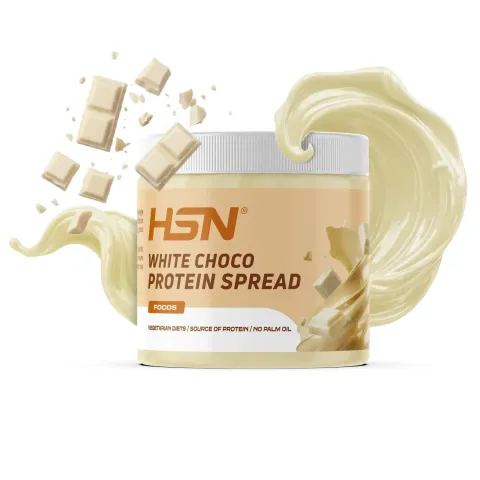
New white chocolate protein cream: smooth, sweet, and extra creamy
White Chocolate Protein Cream from FoodSeries is a white chocolate protein spread, sweetened with a sweetener, made with the new HSN spreadable cream recipe and containing 22% protein.
This cream was born with the same idea as our best-known protein spreads: to offer a sweet, creamy, and easy-to-enjoy option, but with a more interesting composition for everyday life. This time, white chocolate takes center stage: a milkier, smoother, and rounder flavor, with vanilla notes and a texture designed to make you crave it from the very first spoonful.
If you love white chocolate, this new cream is made to become one of those staples you always want at home.
Real white chocolate, in protein cream form
Milky, sweet flavor with vanilla notes: When we think of white chocolate, we’re not after the intense taste of traditional cocoa. We want a softer experience: milky notes, vanilla, pleasant sweetness, and a creamy mouthfeel. That’s exactly what we aimed for with this new cream.
The result is a white chocolate protein cream with a sweet, smooth profile that’s super easy to pair. It tastes like a white chocolate cream made for enjoying, but with a recipe more aligned with today’s mindful eating.
We combined 22g of protein per 100g, an extra creamy texture, and a palm oil-free recipe. A different take aligned with our family of spreadable creams: same practical and delicious approach, but with a totally new flavor.
Why we created this version with the new recipe
Because a softer, milkier version was missing: Hazelnut and cocoa creams have a delicious flavor, but not everyone always wants such an intense profile. That’s why this white chocolate cream expands the concept of our protein spreads with a softer, milkier, and sweeter option.
We wanted a cream that kept what works in these products (flavor, texture, versatility, and ease of use), but with its own personality. A white chocolate cream you can use on toast, pancakes, bowls, desserts, or straight from the spoon, with a pleasant texture and a notable protein boost.
It’s not just another version: it’s our white chocolate take within the HSN protein spread family.
Extra creamy texture: smooth, soft, and never gritty
One of the recipe’s keys: In a white chocolate protein cream, texture changes everything. That’s why this recipe was crafted to achieve a smooth, luscious, and homogeneous feel, avoiding that dry, dense, or gritty texture that sometimes appears in protein spreads. The ingredient blend helps create a more integrated cream, easy to stir and pleasant to use. When mixed, it’s smooth and creamy—perfect for spreading or adding to recipes.
Stir before use to get it just right: Like many spreads, a slight natural separation may appear over time or on first opening. It’s normal: just stir with a spoon until the solid and fat phases blend again. Once mixed, it regains its creamiest, most uniform texture, ready to use on toast, pancakes, waffles, bowls, or homemade baking.
Ideal temperature and consistency: At room temperature, it keeps a perfect spreadable consistency. If cold, it may harden slightly; for a more fluid texture, leave the jar in a warm spot for a few minutes, always away from direct heat sources.
22% protein: more than just a sweet cream
Milk protein for a more complete recipe: This cream isn’t just about flavor. It also stands out with 22% protein content, meaning 22g of protein per 100g. That’s a big difference compared to many conventional sweet creams, which usually have much less protein.
Thanks to its concentrated milk protein, it’s a very interesting option to enrich breakfasts, snacks, and sweet recipes easily, without giving up a creamy texture or the characteristic white chocolate flavor. Since it contains concentrated milk protein, it’s suitable for vegetarian diets, but not for vegan diets.
Delicious and palm oil-free
Sweetened with maltitol: The recipe doesn’t include added sugar as a sweetener. Its sweetness comes from maltitol, a polyol used to provide sweet taste and volume, keeping a pleasant experience in a cream like this. The sugars present are naturally from the cream’s ingredients. So you can enjoy a sweet white chocolate cream with a more mindful recipe that’s easy to fit into your daily routine.
Selected fats: Also, this cream is made without palm oil. Instead, the recipe uses quality selected vegetable fats to help achieve a smooth, creamy, and pleasant texture, keeping a formulation aligned with what we look for in our white chocolate protein cream.
What makes our new white chocolate cream special:
- Sweet, milky flavor with vanilla notes.
- 22g of protein per 100g.
- Extra creamy, smooth, and homogeneous texture when stirred.
- With sweetener, no added sugar as a sweetening ingredient.
- Palm oil-free.
- Suitable for vegetarians.
Cream macros: a more interesting alternative
Many white chocolate creams on the market rely heavily on sugar and fat. Our new cream keeps the sweet and creamy experience you expect from white chocolate cream, but with a composition that fits better into your routine.
Compared to many conventional sweet creams, this option stands out for its 22% protein and only 9g of sugars per 100g, while maintaining a sweet taste and very creamy texture.
If you’re craving white chocolate cream, this recipe lets you enjoy that soft, milky, and sweet flavor with a more modern approach: more protein, less sugar than many traditional options, and a texture made for repeating.
Where it works best: easy ideas to enjoy it
1. In breakfasts and snacks
This cream fits perfectly in simple everyday preparations. Its creamy texture makes it easy to spread, and its white chocolate flavor pairs especially well with fruits, neutral bases, and bakery-style recipes.
- Toast with banana and a touch of cinnamon.
- Pancakes made with Evocakes, using the cream as a topping.
- Oat porridge, added at the end for an extra creamy finish.
- Overnight oats, with a spoonful in the center as a creamy heart.
- Waffles topped with fresh fruit and white chocolate cream.
2. In cold formats
- Natural or Greek yogurt: add and stir to make a mousse-like cream.
- Fruit like strawberries, apple, or pear: use as a sweet dip.
- Fresh whipped cheese: mix a spoonful to make a creamy, protein-rich dessert.
- Cold bowls with oats, red fruits, and crunchy toppings.
3. In drinks, shakes, and coffee
- Smoothies: add a spoonful to give body and white chocolate flavor.
- Vanilla protein shake: combine with the cream for a more indulgent profile.
- Latte-style coffee: add a small amount at the base to make a sweet and creamy version.
Fit baking: how to use it in homemade recipes
- In doughs
Works great in cakes, muffins, cookies, and other sweet recipes to add white chocolate flavor. A simple trick is to mix it with the creamiest part of the recipe, like yogurt, fresh whipped cheese, or nut creams, so it spreads better.
- In fillings and toppings
You can also use it as a filling for crêpes, between pancake layers, or to top brownies, cakes, and sweet bowls. If you want a lighter topping, mix it with milk or fresh whipped cheese until you get a frosting-like texture.
- Color and browning
Keep in mind that, since it’s sweetened with maltitol and not with added sugar, some recipes may brown less than traditional white chocolate creams with sugar.
Pair it with other HSN products
This white chocolate cream works great with other HSN products to prepare easy breakfasts, snacks, and desserts.
Ideas worth trying:
In creative cooking: try sweet-salty contrasts
White chocolate pairs especially well with nuts, salt, and crunchy bases. You can use this cream in homemade bars with oats, toasted nuts, and a touch of flaked salt, or add it in small amounts over sweet recipes to create contrast.
It also works great with slightly tart fruits like strawberries, raspberries, or blueberries, as they balance the natural sweetness of white chocolate’s profile.
Room temperature storage: texture always ready
Store in a cool, dry place, away from heat sources and direct sunlight. At room temperature, it keeps a more pleasant spreadable texture than in the fridge.
If you leave it cold and it hardens, no worries: let it come back to room temperature, stir well, and it will regain its creamy point.
Who is this white chocolate cream for?
For athletes, sweet lovers, and white chocolate fans: This cream is a particularly interesting option if you love white chocolate and want a more complete alternative for breakfasts, snacks, or sweet recipes. Its smooth flavor and creamy texture make it super easy to use, both in quick recipes and more elaborate preparations.
- To make your breakfasts more appealing with a sweet and extra creamy cream.
- To add protein to everyday sweet recipes easily.
- To enjoy white chocolate flavor with a more modern recipe.
- For those looking for a palm oil-free alternative in their pantry.
- To prepare toppings, fillings, and desserts with a milky, sweet, and smooth touch.
Frequently asked questions about White Chocolate Protein Cream
Does it contain sugar?
It doesn’t have added sugar as a sweetening ingredient. Still, it contains naturally occurring sugars from its ingredients and is sweetened with maltitol.
What are maltitols and why are they used?
Maltitols are polyols that provide sweetness and volume. In this cream, they’re used to achieve a sweet taste and pleasant texture, keeping a more interesting recipe than many traditional sugar-based creams.
Can it be heated?
Yes. If you want it more fluid for toppings or to mix into a blend, you can gently heat and stir it. Avoid overheating to keep the texture stable.
Is it suitable for vegetarians?
Yes, it’s suitable for vegetarians because it contains milk protein. It’s not suitable for vegan diets.
Is it part of the same family as other HSN protein spreads?
Yes, it shares the same concept: a spreadable, creamy, versatile protein cream designed to enjoy in breakfasts, snacks, and recipes. This time, with its own personality based on white chocolate flavor.
If you love white chocolate and want a protein cream that’s smooth, sweet, creamy, and palm oil-free, this new recipe is made for you.
Scientific bibliography
- Storey, D. M., Koutsou, G. A., Lee, A., Zumbe, A., Olivier, P., Le Bot, Y., & Flourié, B. (1998). Tolerance and breath hydrogen excretion following ingestion of maltitol incorporated at two levels into milk chocolate consumed by healthy young adults with and without fasting. The Journal of Nutrition, 128(3), 587–592.
- Palatnik, D. R., Portella, A. C., & others. (2020). Maltitol: Analytical determination methods, applications in the food industry, metabolism and health impacts. International Journal of Environmental Research and Public Health, 17(14), 5227.
- Heume, M., & Rapaille, A. (1996). Versatility of maltitol in different forms as a sugar substitute. In T. H. Grenby (Ed.), Advances in Sweeteners (pp. 85–108). Springer.
- Macridachis, J., Bayés-García, L., & Calvet, T. (2025). Temperature-driven changes in the polymorphism, microstructure and thermal properties of cocoa butter/shea butter stearin blends. Food Biophysics, 20, Article 153.
- Tolve, R., Tchuenbou-Magaia, F. L., Verderese, D., Simonato, B., Puggia, D., Galgano, F., Zamboni, A., & Favati, F. (2021). Physico-chemical and sensory acceptability of no added sugar chocolate spreads fortified with multiple micronutrients. Food Chemistry, 364, 130386.