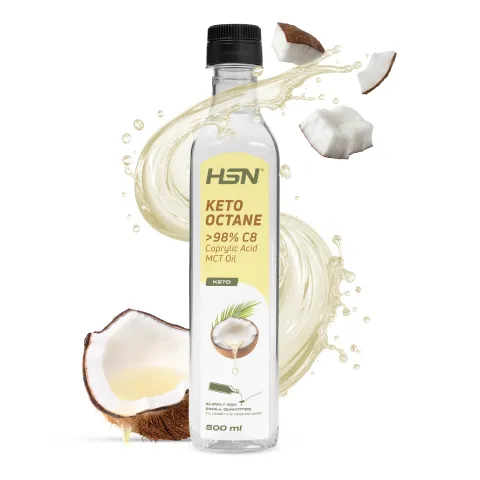
Coconut MCT Oil for an easy keto routine
Keto Octane from KetoSeries is a MCT oil made from medium-chain triglycerides derived from coconut oil, with a concentration above 98% in caprylic acid, also known as C8.
It is a option designed for those following a keto, low-carb or high-fat diet, and looking for a lipidi source easy to integrate into drinks, recipes or day-to-day preparations.
Keto Octane concentrates what many people look for in a MCT oil: coconut origin, C8 profile, neutral taste and a formula without palm or rapeseed.
What makes Keto Octane different
More than 98% caprylic acid C8: Not all MCT oils are the same. Many products combine different medium-chain triglycerides, while Keto Octane focuses on C8, one of the most valued MCTs in ketogenic diets for its nutritional profile and its common use as a quick fat source to incorporate.
Its composition allows adding MCTs conveniently without contributing carbohydrates or sugars, something especially interesting when aiming to maintain a low-carb diet.
From coconut, no palm or rapeseed: Keto Octane is obtained from coconut oil. This allows offering a plant-based MCT oil, vegan-friendly and without palm or rapeseed. Moreover, its formula is very simple: medium-chain triglycerides derived from coconut oil.
Neutral taste for daily use: One of its advantages is that it doesn’t have the strong coconut flavor typical of traditional coconut oil. Its neutral profile makes it easy to incorporate into sweet or savory preparations, hot or cold drinks, and quick recipes without altering the final result too much.
How to use Keto Octane in your diet
The recommended method is to add it gradually, in small amounts, until you reach the flavor or texture you want. This usage approach allows adjusting the amount to each preparation and to individual tolerance.
You can incorporate it into:
- Coffee, infusions or keto coffee drinks.
- Shakes, smoothies or protein drinks.
- Yogurts, bowls, creams or purées.
- Cold sauces, dressings or prepared recipes.
- Keto and low-carb preparations where you want to add a source of vegetable fat.
If you’re not used to MCT oil, it’s better to start with a small amount and increase gradually. In some people, high initial use can be heavy on the digestive system.
A practical option for keto and low-carb diets
Keto Octane fits especially well in ketogenic diets because it provides MCTs and contains no carbohydrates or sugars. It can also be used in low-carb diets or in routines where a simple way to increase energy intake from medium-chain triglycerides is sought.
It’s a convenient tool to complete recipes and drinks within a nutrition plan tailored to your goals.
What to pair Keto Octane with
If you want to integrate it into a more complete keto routine, you can pair it with other HSN products depending on when you use it:
Frequently Asked Questions about Keto Octane
Is Keto Octane the same as coconut oil?
Not exactly. It comes from coconut oil, but its composition is concentrated in C8 caprylic triglycerides. Conventional coconut oil contains a broader mix of fatty acids and doesn’t present the same concentrated caprylic acid profile.
Does it taste like coconut?
It doesn’t have a strong coconut flavor. Its profile is neutral, so it can be added to coffees, shakes, yogurts or recipes without changing the final taste too much.
Can it be used in coffee?
Yes. It’s one of the most common uses in keto routines. You can add it gradually to coffee and mix well until integrated.
Can I cook with this oil?
It’s best used mainly in drinks, cold or warm-tempered recipes or ready-made preparations. For hot recipes, it’s better to add it at the end and avoid overheating.
How do I start taking it?
The most recommended approach is to start with small amounts and increase gradually according to tolerance. That makes it easier to fit into your daily routine.
Scientific bibliography
- Bach, A. C., & Babayan, V. K. (1982). Medium-chain triglycerides: an update. The American Journal of Clinical Nutrition, 36(5), 950-962.
- St-Onge, M. P., & Jones, P. J. H. (2002). Physiological effects of medium-chain triglycerides: potential agents in the prevention of obesity. The Journal of Nutrition, 132(3), 329-332.
- Schönfeld, P., & Wojtczak, L. (2016). Short- and medium-chain fatty acids in energy metabolism: the cellular perspective. Journal of Lipid Research, 57(6), 943-954.
- Mumme, K., & Stonehouse, W. (2015). Effects of medium-chain triglycerides on weight loss and body composition: a meta-analysis of randomized controlled trials. Journal of the Academy of Nutrition and Dietetics, 115(2), 249-263.